
When the Jaw Pain Won't Go Away
TMJ Disorder Treatment
SMILE BRILLIANTLY, Live Beautifully.
Understanding What's Causing Your Jaw Pain
Jaw pain can make ordinary things feel hard. Chewing, yawning, laughing, talking through a long day. TMJ disorders can also be confusing because the symptoms, including headaches, ear pressure, clicking, neck tension, and jaw soreness, overlap with other conditions.
TMJ (temporomandibular joint) disorders affect the joint connecting your jaw to your skull. Symptoms range from clicking and popping when you open your mouth, to jaw stiffness in the morning, to chronic headaches and earaches that don't respond to typical treatment. The cause is often a combination of bite issues, nighttime grinding, stress, and joint misalignment, and the right treatment depends on pinpointing which factors apply to you.
Most TMJ treatment starts conservatively. Custom-fit oral appliances, bite adjustments, stress management techniques, and coordination with medical providers when needed can all be part of the plan. The first step is a thorough evaluation to figure out what is actually causing your symptoms.



Why Choose Dentistry at East Piedmont for Your TMJ Treatment

Dr. Ashish Patel
TMJ treatment starts with understanding the pattern. The bite, the muscles, the joint, and the symptoms all have to be read together.
FOUNDED 2001 · 3 DOCTORS · REAL PATIENT SMILES ONLY
TMJ disorders need more than a quick look at the jaw. Dr. Ashish Patel approaches TMJ cases with a comprehensive evaluation that may include bite analysis, joint imaging, muscle assessment, and a detailed symptom history before recommending treatment.
The goal is conservative care first. Custom night guards, bite adjustments, and habit changes help many patients improve without invasive treatment.
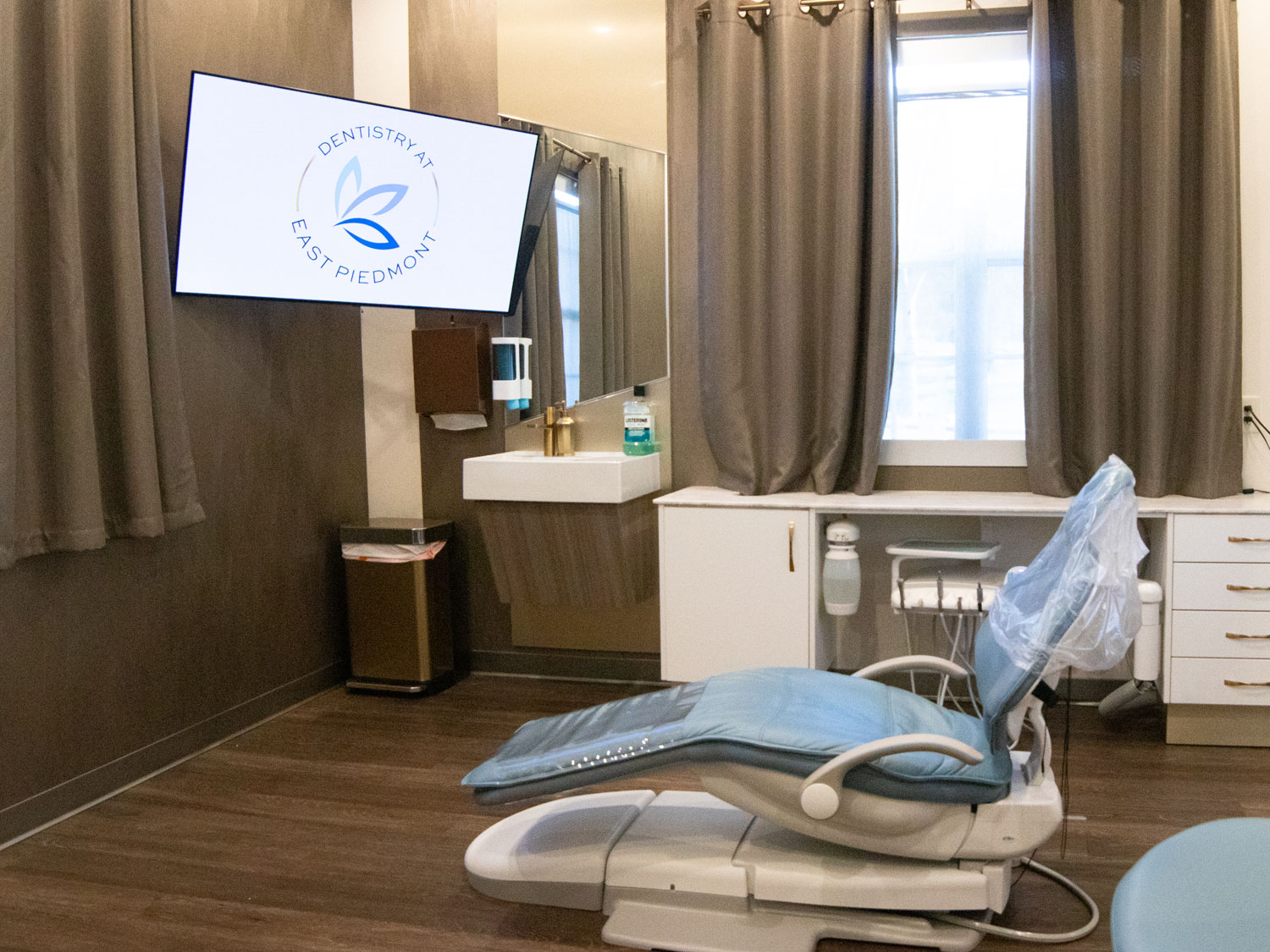
Your appointment happens in our private treatment rooms with the comforts that have made Dentistry at East Piedmont known as Marietta's upscale dental spa.
The Experience Around TMJ Treatment
Symptom Mapping
We listen for the full pattern. Jaw pain, popping, headaches, ear pressure, morning soreness, grinding, and bite changes.
Bite and Joint Evaluation
The exam looks at how your teeth meet, how the jaw moves, and where muscles are overworking.

Conservative Treatment First
Custom appliances, bite adjustments, and behavior changes are considered before invasive options.

Follow-Up Refinement
TMJ treatment often improves through small adjustments, symptom tracking, and appliance refinements over time.
Why Patients Choose Us for TMJ
Root-Cause Diagnosis
We figure out what's actually causing your TMJ symptoms before prescribing treatment. Bite issues, grinding, joint alignment, and muscle tension all show up differently, and the right treatment depends on identifying the actual driver.

Conservative First
We start with the least invasive treatment that fits the case. Custom night guards, bite adjustments, and habit changes are considered before more involved options.
Custom-Fit Appliances
Off-the-shelf night guards rarely fit well enough to be comfortable or effective. We design custom appliances based on your bite and your specific symptoms, with adjustments built into the follow-up schedule.

Long-Term Symptom Tracking
TMJ treatment is not a one-visit fix. We track your symptoms over time and adjust the approach if the appliance, bite, or habits need refinement.
What to Expect, Step by Step
Comprehensive Evaluation
We start with a thorough exam. Bite analysis, joint imaging if needed, palpation of the muscles around your jaw, and a detailed symptom history. By the end of the visit, we have a clear picture of what's likely driving your TMJ symptoms.
Treatment Plan
Based on the evaluation, we recommend the conservative treatment most likely to address your specific case. This may involve a custom night guard, bite adjustment, and practical guidance around the habits that keep the muscles tense.
Custom Appliance Fitting
If a custom appliance is part of your treatment, we take digital impressions and design it to your specifications. You return for fitting and initial adjustments.
Follow-Up and Adjustment
TMJ treatment is iterative. You return for follow-up visits over the next few months as we adjust your appliance, track symptom changes, and refine the approach.
Do You Have a TMJ Disorder?
TMJ disorders show up in different ways for different people. These are the signs to come in for an evaluation:
- You have chronic jaw pain, especially in the morning
- You hear clicking or popping when you open your mouth
- You have frequent headaches or earaches with no other clear cause
- You wake up with sore jaw muscles or sensitive teeth
Some symptoms that mimic TMJ are actually caused by other issues. Ear infections, sinus problems, neck conditions, or referred pain from other sources. We work with your medical providers if your case crosses into territory we should coordinate on, and we'll refer you appropriately if your symptoms point to something other than TMJ.
Your Investment in Jaw Comfort
The investment in treating TMJ is really an investment in protecting your bite, teeth, and daily comfort. Bruxism can wear teeth down, crack crowns, and break fillings. Jaw pain, headaches, disturbed sleep, and worn enamel can compound over time. Catching the pattern early is less involved than waiting until the damage spreads.
Coverage for TMJ treatment varies widely. Some insurance plans handle it through medical benefits, some through dental benefits, and some exclude it. We file as a courtesy when applicable and make every effort to estimate your portion, but estimates are not a guarantee.
If your specific case calls for a treatment plan that goes beyond what insurance covers, financing options are available so the investment fits into manageable monthly payments.
The most reliable way to know what's causing your symptoms and what your treatment plan would involve is the consultation. We'll do the full evaluation and walk you through the plan honestly.
Frequently Asked Questions
Will a night guard fix my TMJ?
A custom-fit night guard can help when grinding or clenching is part of the pattern behind your TMJ symptoms. It gives the jaw a protected place to rest and helps reduce the force on your teeth and joints. Off-the-shelf guards do not fit your bite precisely, which makes them less comfortable and less reliable for consistent wear.
Will I need surgery for my TMJ?
Surgery is not where TMJ treatment usually starts. Most care begins conservatively with a custom night guard, bite adjustments, habit changes, and coordination with medical providers when needed. Surgery is reserved for severe structural problems with the joint itself. If your case points in that direction, we coordinate with an oral surgeon and explain the reasoning clearly.
How do I know if I have a TMJ disorder?
Common signs include chronic jaw pain (especially in the morning), clicking or popping when you open your mouth, headaches with no obvious cause, ringing in the ears, sore jaw muscles, and sensitive teeth from clenching or grinding. Most people experience one or two occasionally; if you have multiple symptoms persistently, an evaluation is worth it. We pinpoint what's actually causing them.